Why do I keep repeating patterns?
Why do I keep repeating patterns?
How healing yours helps the next generation thrive
Have you felt frustrated in a relationship this week?
Maybe it was a sharp word at the end of a long day. Or a miscommunication that didn't get resolved. Maybe you heard your mum or dad's words come out of your mouth, the exact ones you swore you'd never use.
The following day, you're driving to work or exercising and you find yourself having an argument with the person, yet they're not even with you. You feel frustrated and ask yourself the same question:
Why do we keep bumping up against the same issues? Why do I keep repeating patterns when I know better?
Understanding our patterns is the first step.
Change comes when you notice what sits underneath your reaction and practise a different response in small, everyday moments.
This matters for more than your own peace of mind. We all want our tamariki (children) to feel loved, safe and supported. If you're anything like me, you want your mokopuna (grandchildren) and great mokopuna to feel that way too. Our tamariki learn what a relationship looks like by watching ours.
It's hard to be what you can't see.
So the first step towards a world where relationships thrive begins with us: healing our relationship with ourselves, and with the people closest to us.
Most of us carry experiences from childhood that shape how we show up as adults. Some people had really hard childhoods. Others had it easier. Either way, the behaviours we see growing up can have a way of becoming our go-to, especially in stressful times.
You might have promised yourself you'd never do it the way your parents did. Then push comes to shove, and you react in a very similar way. Or you avoid the situation altogether, which doesn't help either.
If you've read the relationship books and listened to the podcasts, please know you're not failing. A good book can give you ideas and insights. But the change happens when you put what you've learnt into practice, in the moments that test you. For example, a boundary drawn as a diagram on your computer screen is a lovely idea. It becomes real when you speak it into existence.
Boundaries also work in every direction: we set them with others, we set them for ourselves, and we respect other people's too.
Here's how that can look:
- You've been working hard and you know you need an early night, so you set a boundary for yourself: phone off, bed early.
- Your partner wants sex and you're not in the mood, so you tell him how you're feeling and ask him to slow down.
- You start to raise your voice in frustration, and your partner tells you they want time out and are happy to chat again once you've cooled down. You allow them to leave.
These are the moments that pull your learning off the page and into your everyday life. One small change at a time can help loosen the pattern.
YOUR TRIGGERS CAN BECOME THE ACCESS POINT TO YOUR HEALING
You know those moments. Your breathing quickens. You freeze. You get defensive. Tears well up and you don't know why. Your mind gets busy and you're having a whole argument in your head. Or you pull away and don't let anyone in.
These reactions are where the real work lives. They're connected to the parts of us that learnt to protect ourselves a long time ago. When we lean into those parts and soften into seeing ourselves with compassion, we begin to heal.
As an adult, you now get to choose to let your triggers become your teacher. Each one points to something worth looking at: a need that hasn't been met, a boundary that's been crossed, or an old belief or wound you've covered up.
I witnessed this in real time a little while ago when I decided to explore different experiences in my childhood.
At first I asked myself: what's a memory from my childhood that I love?
The first thing that came to mind was being on stage. We wore fluorescent costumes with skeletons on them, the lights went off, and we all danced in the dark; all the audience saw was the skeletons dancing. I remembered how it felt. I was excited, happy and proud.
I then asked myself how I could bring more of those feelings into my life now. The answers came easily: doing a great job so I feel proud, bringing my bubbly, fun personality into more situations, tapping into my excitement before going on stage.
The list went on.
Then I asked myself: what's a memory from my childhood that makes me feel uncomfortable?
I answered the question again.....
The second time, no memory came at first. Just a feeling of guilt, which I discovered, with a little more journaling, was related to a situation where I felt it was my fault. I sat with it for a while and journaled about how guilt and believing I was responsible had shown up in my life, and what I've done to avoid those uncomfortable feelings.
The list was enlightening.
- People-pleasing.
- Letting my boundaries fall.
- Taking ownership when it wasn't mine to own.
- Paying more often, and struggling to accept when others paid.
- Not asking for help when I needed it. (I got myself into this mess, I have to get myself out.)
- Holding back in conversations, in case I left others out. (I didn't think to give that responsibility over to others to speak up.)
- Questioning myself after I'd set a boundary.
- Worrying I was taking up too much space.
- Blaming myself after making reasonable requests.
The feelings of guilt and responsibility (at times for things that weren't mine to hold) were uncomfortable, and my behaviours had covered my feelings up. But like most things, what we resist, persists, and that's what I was experiencing.
After all the work I'd done, there was another layer to peel back, slowly and with love. I could see it for what it was: a protection mechanism that had stopped serving me.
If guilt is a pattern you know well, I've written more about it here: why you feel guilty when you stop.
And I'd also love to encourage you to try something… Think of a childhood memory you love, and notice how it felt. Think about how you can bring these feelings into your life more. Then ask yourself the question again, but this time focus on a more uncomfortable situation. Notice what comes up this time. Write it down without judging it. Notice the behaviours you've used to cover up the feelings.
SMALL CHANGES ARE WHERE THE HEALING UNFOLDS....
Awareness is where your power begins. Making small changes is where the healing unfolds. You might accept more help, use your voice, set clearer boundaries, lean in or be more vulnerable. Or, when you feel yourself react, acknowledge what's unfolding, to yourself or even to the other person.
Saying "I feel really triggered right now", or "I'm really hurt", or "I'm angry" can sometimes make all the difference, because you're going straight to the access point, rather than staying up in all the chaos.
You know, someone asked me recently, "What's something important you've done in your life?"
I knew the answer instantly...
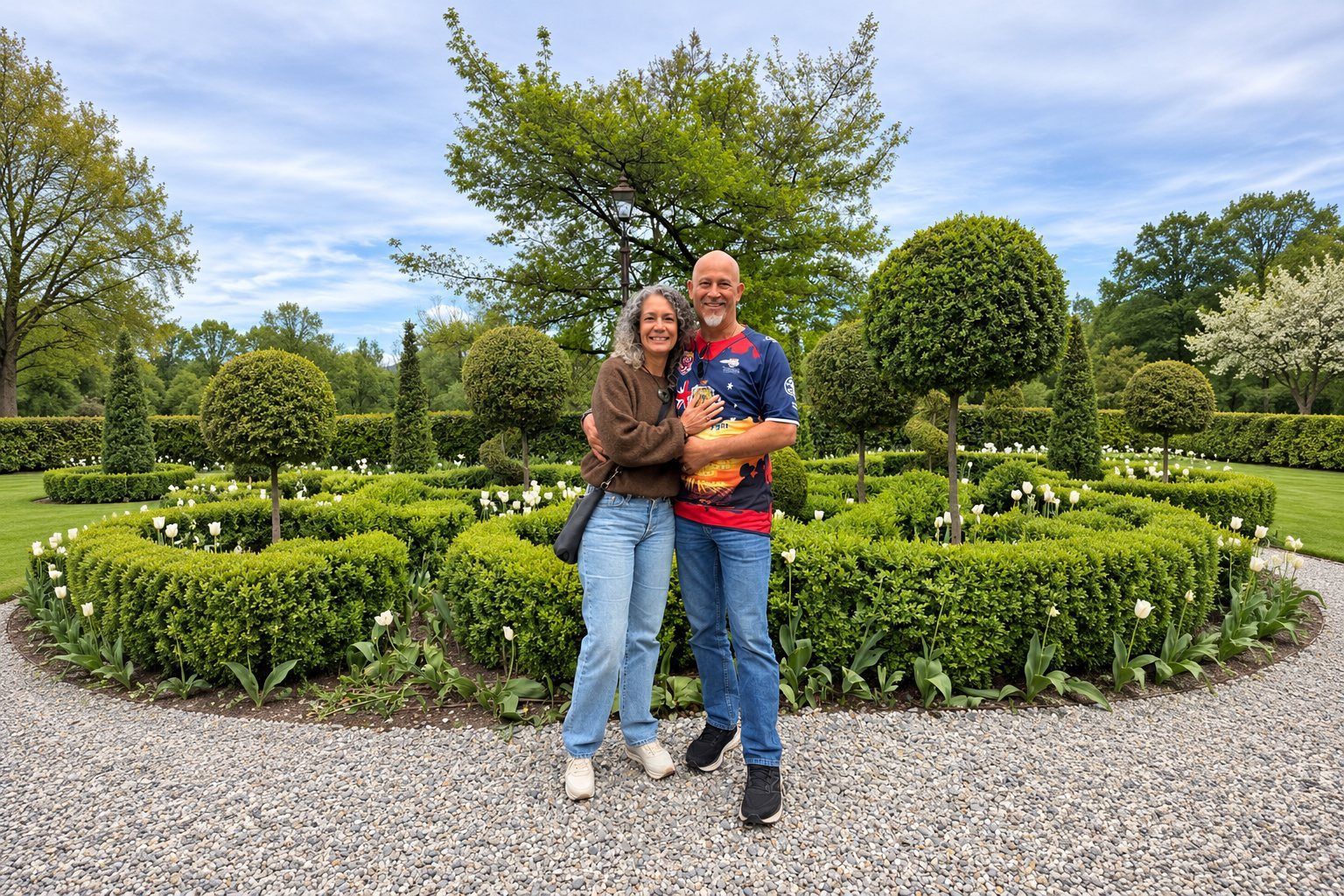
"Building a healthy, thriving relationship with Andy, my husband."
I want my children and grandchildren to see what love can look like. Respect, love and laughter. Working through the tough stuff together as a team. Affection. Going after our goals, growing as individuals and as a couple, and still being madly in love in our 90s. I want them to feel inspired to create beautiful, healthy relationships of their own.
We can talk to our tamariki and mokopuna about boundaries, clear communication and worthiness. Yet when they watch us move through these things in our own relationships, the change is tenfold.
It's hard to be what you can't see.
That's what makes you a superhero: someone who does the work on your relationships, so the generations who come after you can see, feel and experience healthy, thriving love.
So gorgeous, before you go, I'd love you to sit with two questions…
What's your access point? The situation that's pulling you towards healing?
And what's one small change you could make that will alter your pattern and set you free?
If you'd like support along the way, join my newsletter. For your first month, you'll receive a weekly email with questions, tips and tools to help you notice your own patterns and start living the changes you want.
If this resonated with you, feel free to share this with a friend.
Share